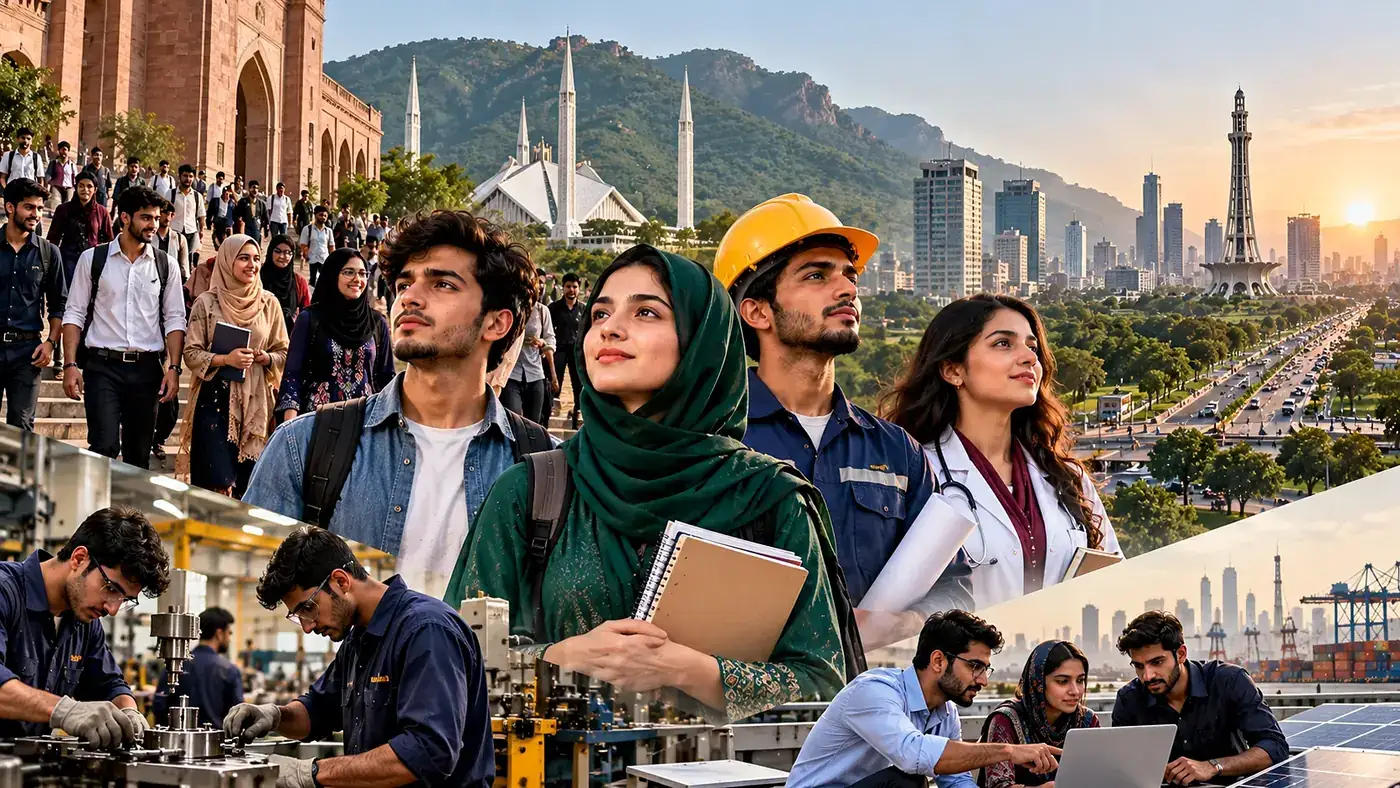
Pakistan has just crossed 259 million people. Our median age is 21.8 years, about ten years younger than the world median of 32.1. That is not just a statistic. It is the future of our economy, written in one number.
I started my business from scratch in 2008, with no big capital and no system behind me. Over the years I have trained many young people with my own hands, and today many of them run their own businesses. So when I look at these numbers, I don't only see a crisis. I see millions of young people who are one right decision, one right skill and one right mentor away from changing their lives.
But I also see the danger. Without guidance, this same youth can become Pakistan's biggest burden.
The numbers we can't ignore
The latest official data from the Pakistan Bureau of Statistics (Labour Force Survey 2024-25) tells a clear story.
Source: Pakistan Bureau of Statistics, Labour Force Survey 2024-25; UN World Population Prospects 2024.
Look at that last point carefully. Our problem is not that young people are uneducated. Our problem is that education is not connected to earning.
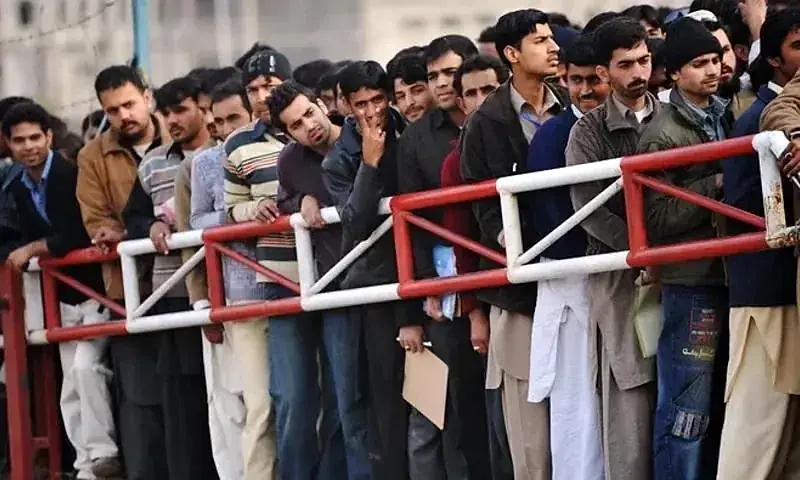
Meanwhile, Pakistan adds about 4 million people every year, and our labour force grew from 71.8 million to 85.6 million in four years. Every year, a population the size of a full city enters the job market looking for work.
Who is hit hardest
Unemployment rate by group, 2024-25 (%)
PBS Labour Force Survey 2024-25 (new 19th ICLS standard, ages 10+).
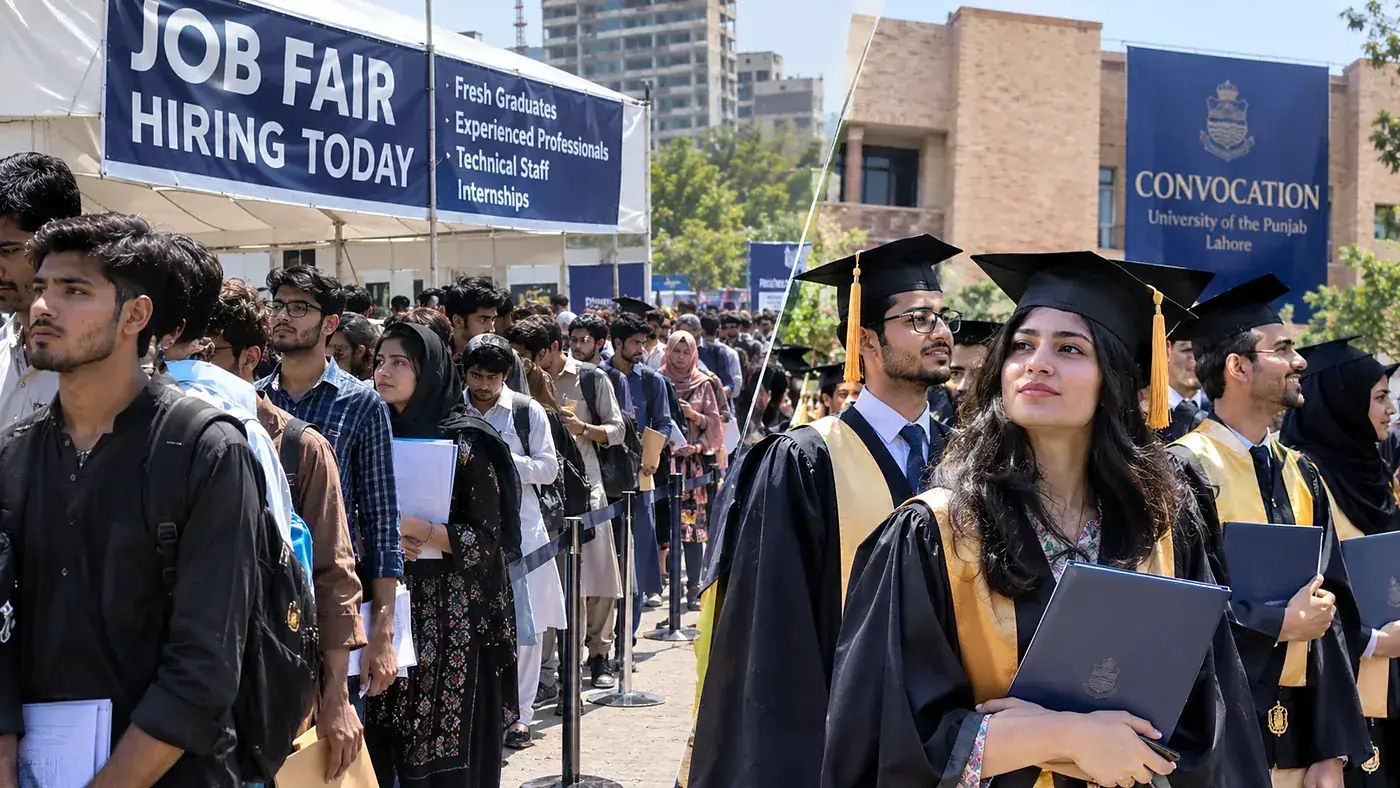
Dividend or disaster? It depends on one word: guidance
Economists call this moment a demographic dividend: a large, young, working-age population that can power growth. It is the same wave that built East Asia's economic miracle.
But a dividend is not automatic. It has to be earned.
A young population with skills, direction and opportunity becomes an engine. Without them, it becomes frustration, migration and lost potential.
Pakistan isn't short on ambition. Our youth are hungry, talented and hard-working. What they lack is the right guidance and a clear pathway. Most young people finish school or university and ask the same question: "Now what?" Nobody shows them how to turn a skill into income, or an idea into a business. That is the gap we must fill.
What I've learned building a business from zero
My own journey taught me lessons no classroom ever did.
Value is created, not found
At Murad Interiors, we built our business by turning low-value materials into high-value products.
This is exactly what Pakistan needs to do with its youth: take raw potential and add value through skills.
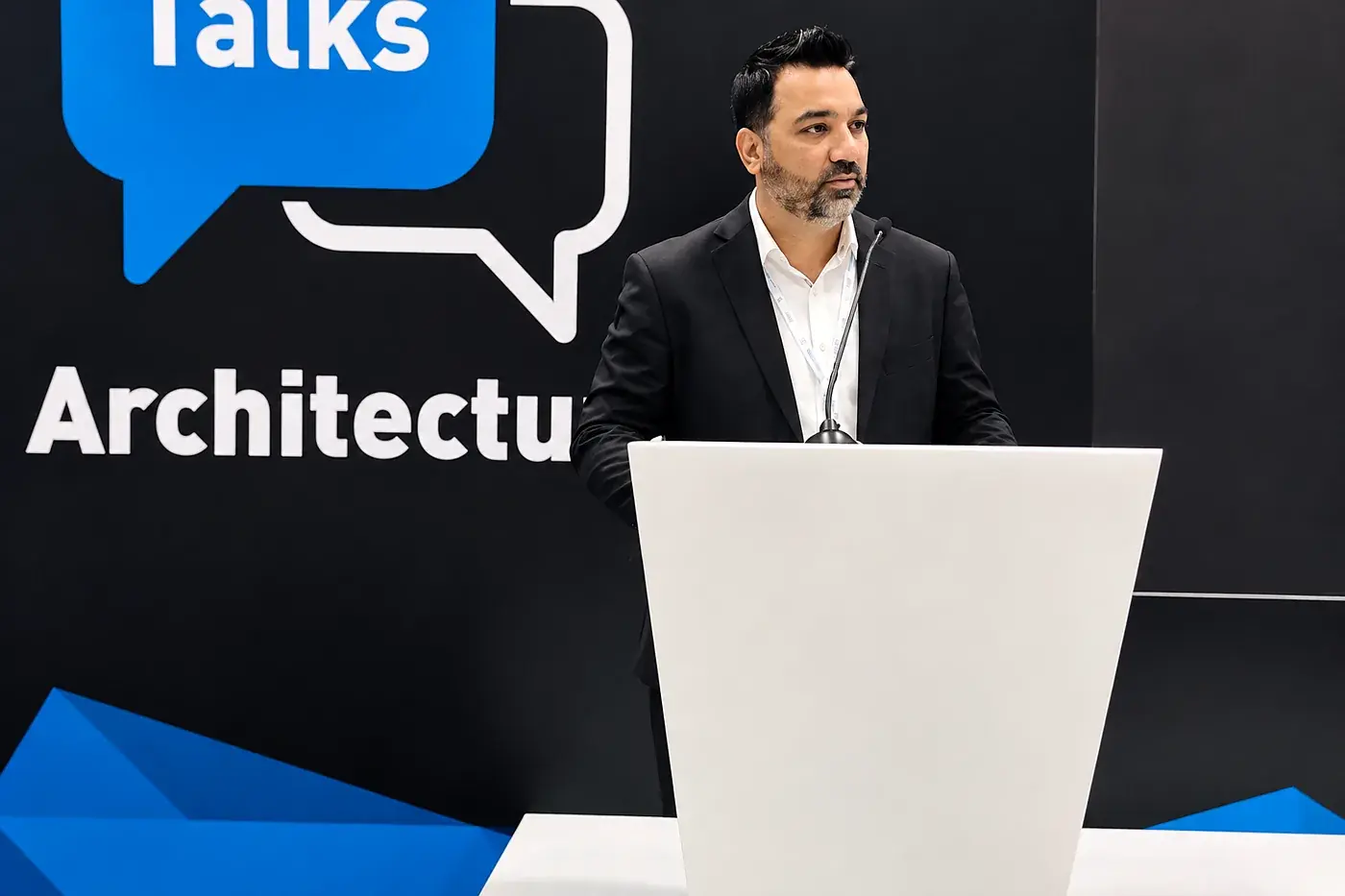
Hands-on skills create jobs faster than degrees alone
I have physically trained many people in ceiling work, GRC, planters and artificial plants. Many of them now run their own workshops and businesses and employ others. One trained person can create five more jobs.
Local products can compete globally
We started in Islamabad, expanded to Lahore and Karachi, and now export to Australia and the USA. You can see our work on the Murad Interiors Instagram page. If a business started from zero can export, so can thousands of young Pakistani entrepreneurs, with the right guidance.
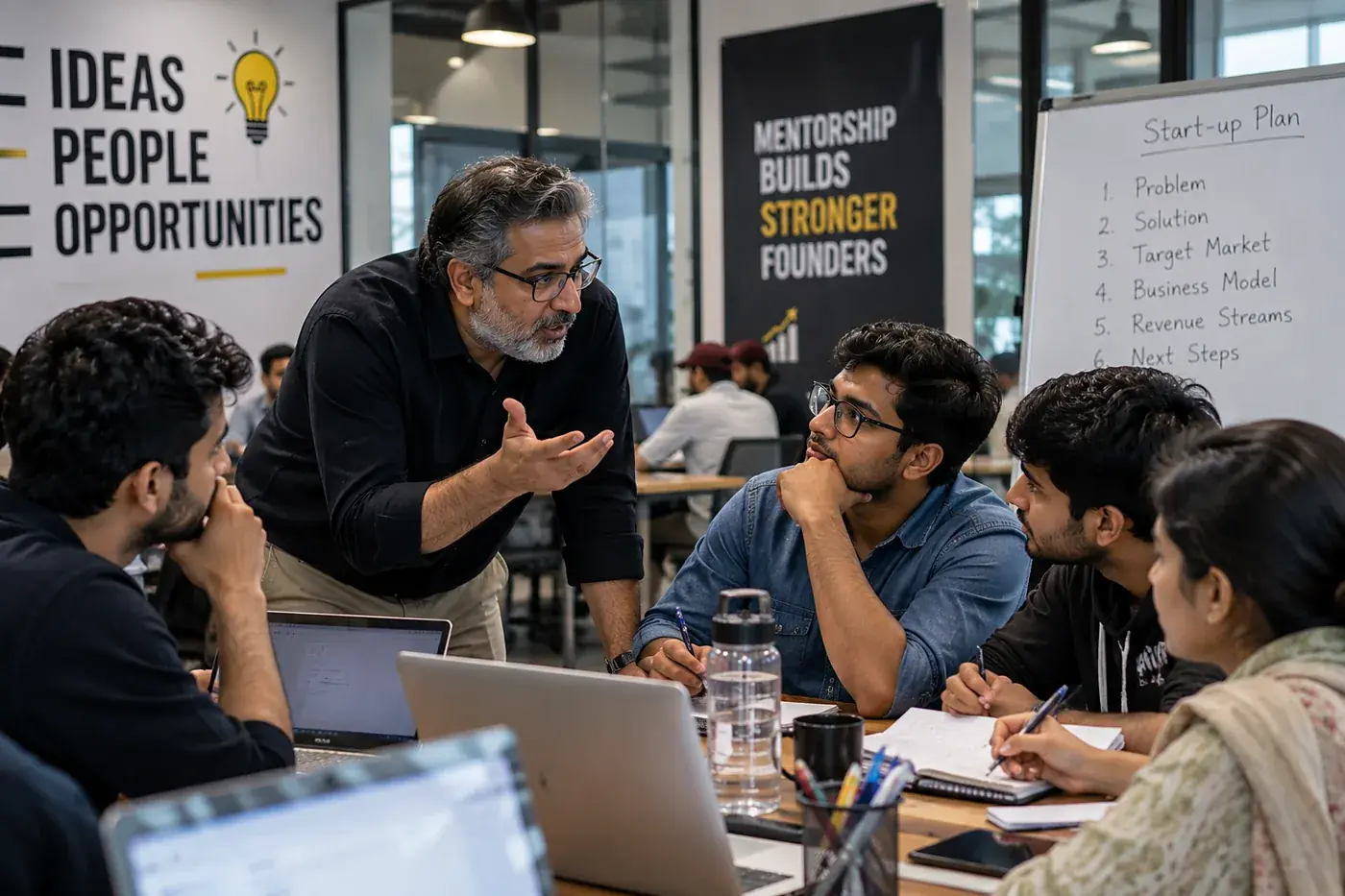
Mentorship multiplies success
That is why I started BINCO (Business Inco), a platform for networking and business mentoring. One honest mentor can save a young entrepreneur years of mistakes.
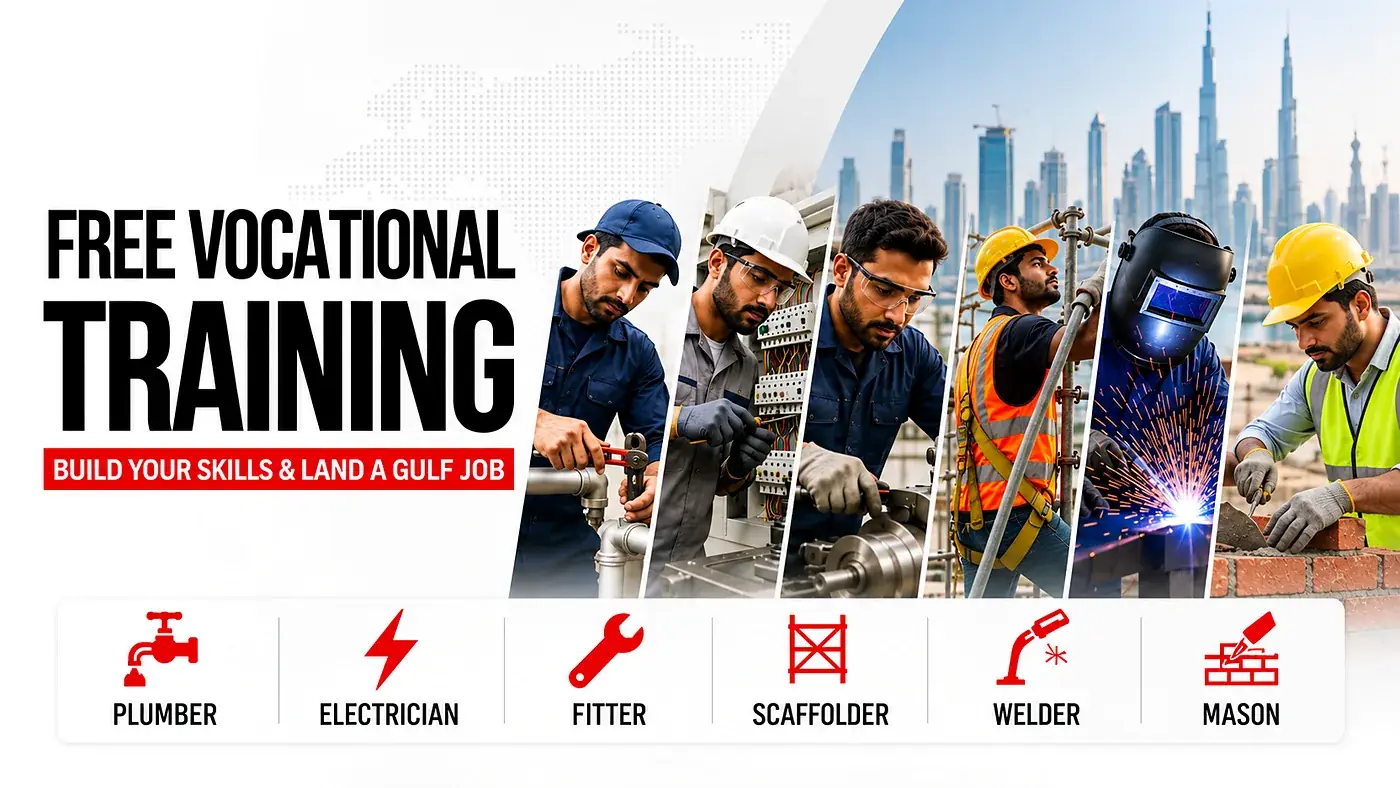
How a weak economy can benefit from a young population
Many people say: "The economy is bad, so there is no opportunity." I believe the opposite. A struggling economy with a young population has hidden advantages, if we use them correctly.
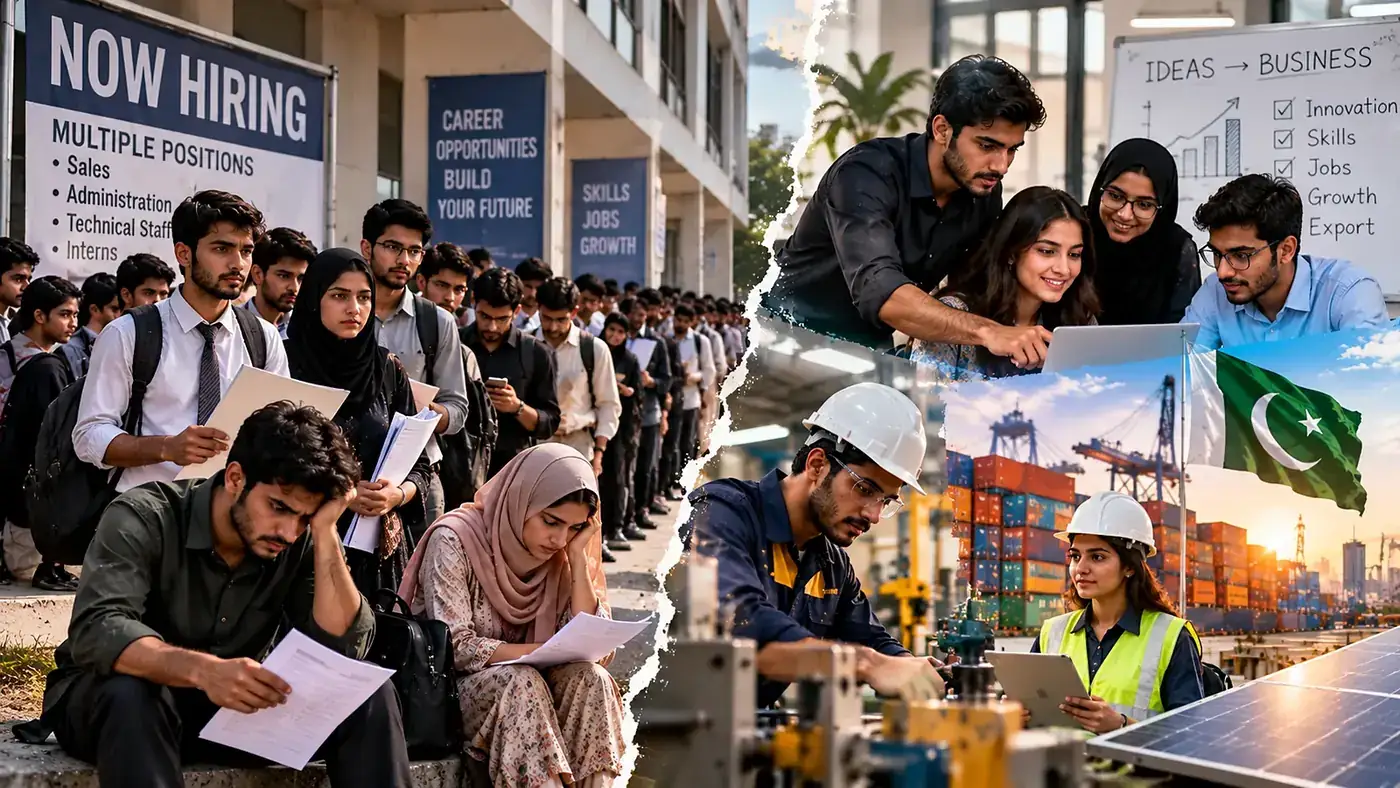
Competitive labour means an export edge
A young, affordable workforce makes Pakistani products competitive abroad. Bangladesh and Vietnam grew exactly this way, in furniture, décor, textiles, crafts, IT and food.
A weak rupee makes exports attractive
Imports become expensive, but Pakistani products become cheaper for foreign buyers. Now is the time to think export-first, not import-first.
Make it here
Every product we import is an opportunity for a young Pakistani to make it locally, from décor items to building materials.
Waste becomes raw material
Pakistan produces huge agricultural, stone and industrial waste. With innovation, waste becomes products, jobs and exports.
Earn in dollars from anywhere
A young person with a laptop and the right skill can serve global clients in design, marketing, e-commerce, content and software.
Home-based work for women
With 18% of urban women unemployed, flexible home-based production and online selling can bring millions of skilled women into the economy.
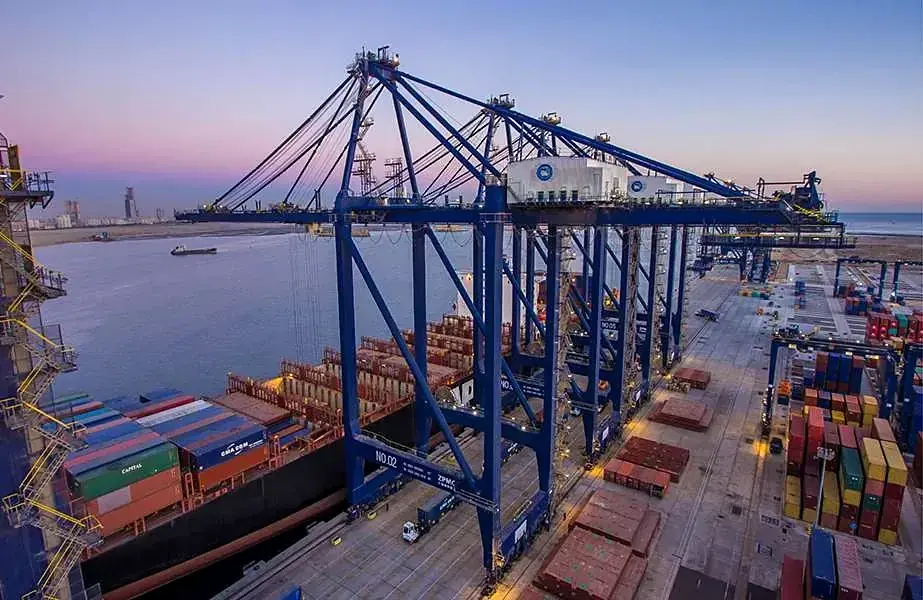
What must happen now
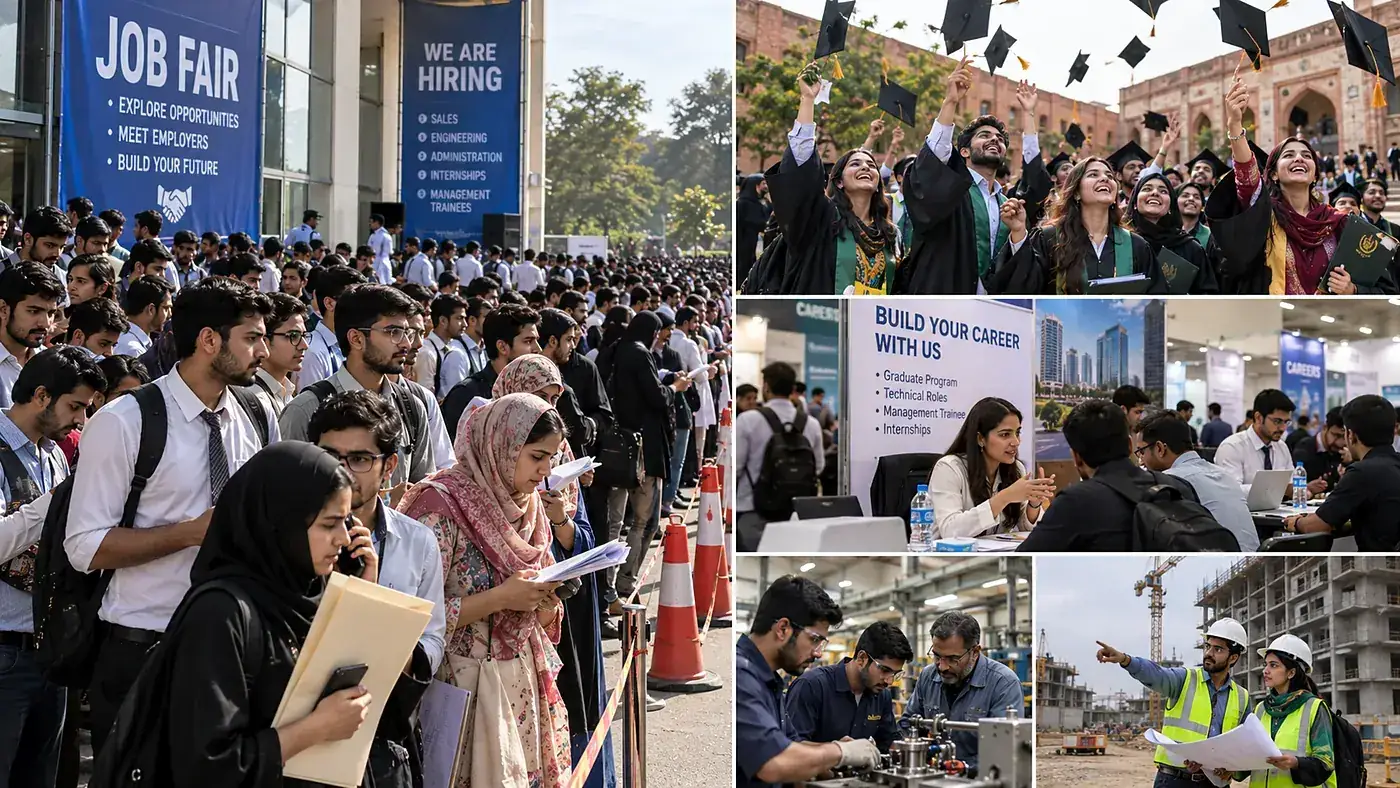
Everyone has a role. These are the steps I recommend to each group.
- Learn a skill that pays, not just a subject that passes
- Start small: one product, one service, one customer
- Find a mentor who has actually built something
- Ask: how can I make something worth more?
- Think export and online from day one
- Train apprentices; every skilled worker strengthens your industry
- Open workshops for internships and practical learning
- Help your best workers become suppliers and partners
- Link technical and vocational training to real industry demand
- Make it easier to register and run a small business
- Support SMEs and exporters with simple finance and market access
- Create safe, flexible work options for women
- Respect skills and entrepreneurship as much as government jobs
- Encourage children to build, not only to search
The biggest wave is still ahead
Only about 39% of Pakistanis live in cities today (2023 Census), so the biggest wave of urbanization is still ahead of us. Cities can become centres of productivity and innovation, or centres of unemployment and frustration. The choice is being made right now.

Pakistan is not choosing between opportunity and crisis. We are living inside both at the same time, on a clock that is not waiting for policy to catch up.
I believe in Pakistan's youth. I have seen ordinary young people, given the right guidance, build extraordinary lives. If we give our young people skills, mentorship and a pathway, this youth bulge will not be our disaster.
It will be our revival.
Want guidance for your business or career?
I share practical lessons on building a business from scratch, adding value to products, increasing sales, exporting and growing a brand.
Email: abdul@hafizabdulrasheed.com
Frequently asked questions
What is Pakistan's youth unemployment rate?
According to the Pakistan Bureau of Statistics Labour Force Survey 2024-25, unemployment among 15–24 year olds is about 12.5%, meaning roughly 1 in 8 young people who want work can't find it.
What is Pakistan's median age?
About 21.8 years (2026, UN estimate), compared with a world median of 32.1 years.
What is a demographic dividend?
The economic growth a country can gain when a large share of its population is of working age, but only if those people are skilled and employed.
How can Pakistan turn its youth bulge into an advantage?
Through market-linked skills training, entrepreneurship and mentorship, export-focused industries, value-added manufacturing, digital work and more opportunities for women.
Who is Abdul Rasheed?
Abdul Rasheed is a Pakistani entrepreneur, the founder of Murad Interiors and a business mentor. He built his company from scratch in 2008 and now exports to Australia and the USA. He received the Australian Pakistani National Association (APNA) Community Enrichment Award 2024. Learn more at hafizabdulrasheed.com.
Abdul Rasheed
Abdul Rasheed is an entrepreneur, the founder of Murad Interiors and a business mentor based in Islamabad. Since 2008 he has built a business from scratch into one of Pakistan's leading names in decorative ceilings, GFRC, engineered-stone planters and artificial plants, working with retail partners across Pakistan and exporting to Australia and the USA. Follow his work on Instagram. He has trained many people in hands-on skills, many of whom now run their own businesses, and mentors entrepreneurs through BINCO. He received the Australian Pakistani National Association (APNA) Community Enrichment Award 2024.
Sources
- Pakistan Bureau of Statistics: Labour Force Survey 2024-25 Annual Report
- DAWN: 1.4m more jobless in four years (26 Nov 2025)
- UN World Population Prospects 2024 (via Population Pyramid)
- Pakistan population estimates, UN WPP 2024 (StatisticsTimes)
- Pakistan Bureau of Statistics: 7th Population & Housing Census 2023